As a shackle supplier, I often encounter various inquiries from customers regarding the performance and application scenarios of our products. One question that frequently comes up is whether shackles can be used in high - temperature environments. In this blog post, I will delve into this topic, exploring the factors that influence a shackle's performance in high - temperature settings and providing insights based on scientific knowledge and industry experience.
Understanding the Basics of Shackles
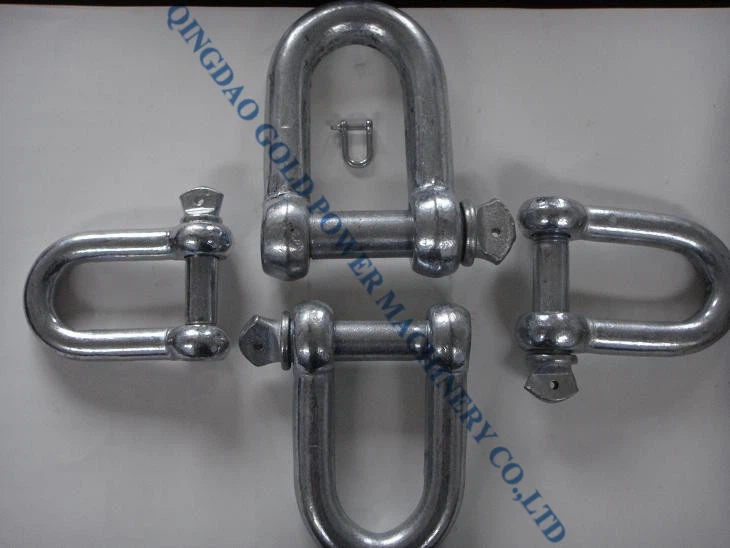
Before we discuss high - temperature applications, let's first understand what shackles are. Shackles are U - shaped metal connectors with a pin or bolt across the opening, used to connect different components in a variety of industries such as marine, construction, and manufacturing. Our company offers a wide range of shackles, including US Type Self Color and Galvanized Anchor Shackle U Bolt Shackle and US Type Square Head Self Color Trawling Shackle, European Trawling Shackle, quick Release Shackle Shackle with Square Head Screw Pin. These shackles are made from different materials, typically steel, which has certain properties that determine their suitability for high - temperature use.
The Impact of High Temperatures on Shackles
High temperatures can have several detrimental effects on shackles. One of the primary concerns is the change in the mechanical properties of the metal. As the temperature rises, the strength and hardness of steel can decrease. This is due to a phenomenon called thermal softening. When steel is heated, the atomic structure becomes more mobile, and the dislocations within the metal can move more freely. This leads to a reduction in the material's ability to resist deformation and stress.
For example, at temperatures above 400°C (752°F), the yield strength of many common steels starts to decline significantly. The yield strength is the point at which a material begins to deform plastically, and a decrease in this value means that the shackle may start to deform under loads that it could normally withstand at room temperature. This deformation can compromise the integrity of the connection and pose a safety risk.
Another issue is oxidation. When steel is exposed to high temperatures in the presence of oxygen, it forms iron oxide (rust). Oxidation can weaken the surface of the shackle, making it more prone to cracking and corrosion. Over time, this can lead to a reduction in the cross - sectional area of the shackle, further decreasing its load - bearing capacity.
Factors Affecting Shackle Performance in High - Temperature Environments
The performance of a shackle in a high - temperature environment depends on several factors:
Material Composition
The type of steel used in the shackle plays a crucial role. Some steels are specifically designed to have better high - temperature properties. For instance, alloy steels that contain elements such as chromium, nickel, and molybdenum can have improved heat resistance. These alloying elements form stable carbides and other compounds within the steel, which help to maintain the strength and hardness at elevated temperatures.

Heat Treatment
Proper heat treatment can also enhance a shackle's performance in high - temperature environments. Processes such as quenching and tempering can modify the microstructure of the steel, improving its strength and toughness. A well - heat - treated shackle will be more resistant to thermal softening and oxidation compared to an untreated one.
Coating
Applying a suitable coating to the shackle can provide an additional layer of protection against oxidation and high - temperature damage. For example, ceramic coatings can act as a barrier between the steel and the surrounding environment, reducing the rate of oxidation. Galvanizing, which involves coating the steel with a layer of zinc, can also offer some protection, although its effectiveness decreases at higher temperatures.
Applications and Limitations
There are some applications where shackles may be exposed to high temperatures. In the metalworking industry, for example, shackles are used to lift and move hot metal parts. In such cases, it is essential to select the right type of shackle based on the temperature range and the load requirements.
However, there are limitations. For extremely high - temperature applications, such as in furnaces or near molten metal, traditional steel shackles may not be suitable. In these situations, alternative materials like refractory metals or high - temperature alloys may be required.
Selecting the Right Shackle for High - Temperature Use
When choosing a shackle for a high - temperature application, it is important to consider the following steps:
Determine the Temperature Range
First, accurately assess the maximum temperature that the shackle will be exposed to. This will help you select a material and heat - treatment process that can withstand those conditions.
Calculate the Load Requirements
Understand the load that the shackle will need to support. This includes both the static and dynamic loads. Make sure that the selected shackle has a sufficient load - bearing capacity at the expected high temperature.
Consult with Experts
If you are unsure about which shackle to choose, it is advisable to consult with a materials engineer or an experienced supplier. Our team of experts at [our company] can provide you with detailed information and recommendations based on your specific requirements.
Conclusion
In conclusion, while shackles can be used in some high - temperature environments, it is crucial to understand the limitations and take appropriate measures to ensure their safe and effective use. By considering factors such as material composition, heat treatment, and coating, you can select a shackle that will perform well under the given conditions.
If you are in the market for shackles for high - temperature applications or any other rigging needs, we invite you to contact us for a detailed discussion. Our team is ready to assist you in finding the perfect solution for your project. Whether it's our US Type Self Color and Galvanized Anchor Shackle U Bolt Shackle or US Type Square Head Self Color Trawling Shackle, European Trawling Shackle, quick Release Shackle Shackle with Square Head Screw Pin, we have a wide range of products to meet your requirements. Let's start a conversation about your procurement needs and find the best shackles for your high - temperature applications.
References
- ASM Handbook Volume 2: Properties and Selection: Nonferrous Alloys and Special - Purpose Materials. ASM International.
- Metals Handbook Desk Edition, 3rd Edition. ASM International.
- "High - Temperature Materials and Their Applications" by Robert A. Rapp.