


In the realm of rigging hardware, D rings are a staple component, widely used across various industries for their versatility and functionality. As a D ring supplier, I've encountered numerous inquiries regarding the shock - resistance of these essential pieces. This blog aims to delve into the question: Are D rings shock - resistant?
Understanding D Rings
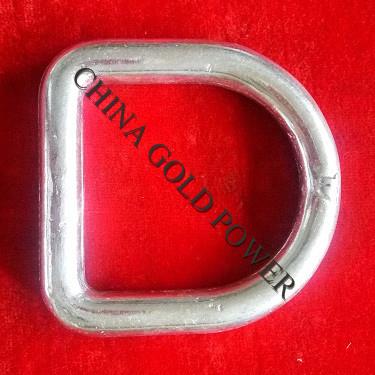
Before we can assess their shock - resistance, it's crucial to understand what D rings are. D Ring is a type of rigging hardware that is shaped like the letter "D". They are typically made from materials such as steel, stainless steel, or aluminum, and come in a variety of sizes and load - bearing capacities. D rings are commonly used in applications like lifting, towing, securing loads, and in safety equipment such as harnesses.
Factors Affecting Shock - Resistance
The shock - resistance of D rings depends on several key factors.
Material
The material from which a D ring is made plays a significant role in its shock - resistance. For instance, forged steel D rings are known for their high strength and durability. Steel has excellent tensile strength, which allows it to withstand sudden impacts without deforming or breaking. Stainless steel D rings, on the other hand, offer corrosion resistance in addition to good strength. They are suitable for outdoor or marine applications where the rigging hardware may be exposed to harsh environmental conditions. Aluminum D rings are lightweight but generally have lower shock - resistance compared to steel. They are often used in applications where weight is a critical factor, such as in some aerospace or lightweight equipment.
Design and Construction
The design and construction of a D ring also impact its shock - resistance. A well - designed D ring will have a smooth, uniform shape with no sharp edges or weak points. The thickness of the material and the way it is formed can affect how it distributes stress during a shock event. For example, a D ring with a thicker cross - section will generally be more shock - resistant than one with a thinner cross - section. Additionally, D rings that are forged or machined to precise specifications are likely to have better shock - resistance than those with rough or inconsistent manufacturing.
Load Rating
Each D ring comes with a specified load rating, which indicates the maximum amount of weight it can safely support. When considering shock - resistance, it's essential to ensure that the D ring is rated for the expected loads, including any dynamic or shock loads. A D ring that is overloaded during a shock event is more likely to fail. For example, if a D ring is rated for a static load of 1000 pounds but is suddenly subjected to a shock load of 2000 pounds, it may deform or break.
Testing Shock - Resistance
To determine the shock - resistance of D rings, manufacturers often conduct a series of tests. These tests simulate real - world shock events and measure the performance of the D ring under stress.
Drop Tests
Drop tests are a common method for evaluating shock - resistance. In a drop test, a weighted object is dropped onto the D ring from a specific height. The impact simulates a sudden shock, such as a load being dropped or a sudden jerk. After the drop, the D ring is inspected for any signs of damage, such as cracks, deformation, or loss of strength. If the D ring passes the drop test without significant damage, it is considered to have good shock - resistance.
Tensile Tests
Tensile tests are also used to measure the strength and shock - resistance of D rings. In a tensile test, a D ring is gradually pulled until it reaches its breaking point. The test measures the maximum load the D ring can withstand before failure. By analyzing the results of tensile tests, manufacturers can determine the D ring's ultimate strength and its ability to handle shock loads.
Applications and Shock - Resistance Requirements
Different applications have different shock - resistance requirements for D rings.
Lifting Applications
In lifting applications, such as in construction or industrial settings, D rings are used to attach lifting equipment to loads. These applications often require high - shock - resistant D rings because the loads can be heavy and the lifting process may involve sudden movements or jerks. For example, when lifting a large piece of machinery, a shock load can occur if the load is accidentally dropped or if there is a sudden stop during the lifting operation. A D ring with poor shock - resistance may fail under these conditions, leading to serious safety hazards.
Towing Applications
Towing applications also demand D rings with good shock - resistance. When towing a vehicle or a trailer, sudden stops or starts can create significant shock loads on the D rings. A D ring that cannot handle these shock loads may break, causing the towed object to become detached. This can be extremely dangerous, especially on busy roads.
Safety Equipment
In safety equipment such as harnesses, D rings are used to secure the user. Shock - resistance is crucial in these applications because a sudden fall or impact can generate high shock loads. A D ring in a safety harness must be able to withstand these loads without failing to ensure the user's safety.
Comparing D Rings with Other Rigging Hardware
It's also interesting to compare D rings with other types of rigging hardware in terms of shock - resistance. Rigging Hardware O Ring is another common type of rigging ring. O rings have a circular shape, which distributes stress more evenly around the ring compared to D rings. However, D rings are often preferred in applications where the attachment point needs to be more directional. In terms of shock - resistance, both D rings and O rings can be designed to handle high loads, but the specific performance depends on their material, design, and construction.

Another type of rigging hardware is the Forged Steel Two Way Safety Buckle Lifting Buckle. These buckles are used for lifting and securing loads. They typically have a locking mechanism that adds an extra layer of safety. While they can also handle shock loads, D rings are often more straightforward and cost - effective for many applications.
Conclusion
In conclusion, D rings can be shock - resistant, but it depends on several factors such as the material, design, construction, and load rating. When choosing D rings for an application, it's essential to consider the expected shock loads and select D rings that are rated to handle those loads. As a D ring supplier, I can provide a wide range of D rings with different shock - resistance capabilities to meet the diverse needs of various industries.
If you are in the market for high - quality D rings or have any questions about shock - resistance and rigging hardware, I encourage you to reach out for a detailed discussion. Our team of experts can help you select the right D rings for your specific application and ensure that you get the best performance and safety.
References
- ASTM International. (20XX). Standard specifications for rigging hardware.
- Machinery's Handbook. (20XX). Industrial Press Inc.
- National Association of Manufacturers. (20XX). Guidelines for the use of rigging hardware in industrial applications.


