


Hey there! As a D ring supplier, I often get asked all sorts of questions about our products. One question that comes up quite a bit is, "Can D rings be used for pool covers?" Well, let's dive right into this topic and find out.
First off, let's talk a bit about what D rings are. D Ring are a type of rigging hardware that are shaped like the letter "D". They're super versatile and are used in a wide range of applications, from securing cargo on trucks to holding up curtains. But can they handle the task of keeping a pool cover in place?
The Basics of Pool Covers
Pool covers serve several important functions. They help to keep debris out of the pool, reduce evaporation, and even save on energy costs by retaining heat. But to do these jobs effectively, they need to be properly secured. That's where D rings might come in handy.
Why D Rings Could Work for Pool Covers
One of the main advantages of using D rings for pool covers is their strength. Most D rings are made from high - quality materials like steel or heavy - duty plastic. This means they can withstand a fair amount of tension and pressure, which is crucial when you're dealing with a large pool cover that might be buffeted by wind or water.
Another plus is their ease of use. D rings have a simple design that makes it easy to attach ropes, straps, or other fasteners. You can quickly and easily secure your pool cover to the edges of the pool using D rings. This is a big time - saver compared to some other more complicated fastening methods.
Let's say you have a large in - ground pool. You can attach D rings to the corners and edges of the pool cover. Then, you can use ropes or straps to connect these D rings to anchor points around the pool. This creates a secure and stable way to keep the cover in place.
Factors to Consider
However, there are a few factors you need to think about before using D rings for your pool cover.
Corrosion
If you're using a pool with a chlorine - based sanitizing system, corrosion can be a major concern. Chlorine is a powerful chemical that can eat away at metal over time. So, if you choose metal D rings, make sure they're made from corrosion - resistant materials like stainless steel. Stainless steel D rings are more expensive than regular steel ones, but they'll last much longer in a chlorinated pool environment.
Size and Weight of the Pool Cover
The size and weight of your pool cover also matter. For a small, lightweight above - ground pool cover, smaller D rings might be sufficient. But for a large, heavy in - ground pool cover, you'll need larger and stronger D rings. Using D rings that are too small or weak could result in the cover coming loose, which defeats the whole purpose of using a cover in the first place.
Compatibility with Fasteners
You also need to make sure that the D rings you choose are compatible with the ropes or straps you plan to use. Different D rings have different sized openings, and you need to ensure that your fasteners can fit through them easily.
Alternatives to D Rings for Pool Covers
While D rings can be a great option for pool covers, they're not the only choice out there.
Forged Steel Two Way Safety Buckle Lifting Buckle are another type of rigging hardware that can be used to secure pool covers. These buckles offer a high level of security and are also quite easy to use. They have a locking mechanism that ensures the cover stays firmly in place.
Rigging Hardware O Ring are also an alternative. O rings are circular in shape and can be used in a similar way to D rings. They're often used in situations where you need a more uniform distribution of stress.
Making the Right Choice
So, should you use D rings for your pool cover? Well, it depends on your specific needs. If you're looking for a simple, cost - effective, and strong solution, D rings are a great option. But if you need a higher level of security or have specific requirements, you might want to consider the alternatives.

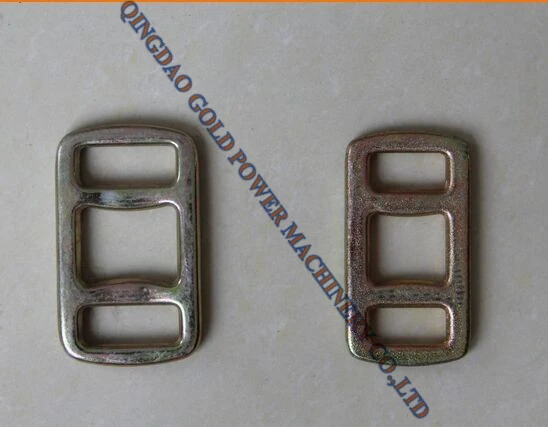
As a D ring supplier, I've seen firsthand how different customers have used our products for pool covers. Some have had great success with D rings, while others have found that other types of hardware work better for them. The key is to do your research and choose the option that's best for your pool and your budget.
If you're still not sure whether D rings are the right choice for your pool cover, I'd be more than happy to help. Just reach out and we can have a chat about your specific situation. Whether you're a homeowner with a small backyard pool or a commercial pool operator, we've got the knowledge and experience to guide you through the decision - making process.
Contact for Purchase and Discussion
If you're interested in purchasing D rings for your pool cover or want to learn more about our products, don't hesitate to get in touch. We're always here to answer your questions, provide product recommendations, and help you find the best solution for your needs.
References
- Smith, J. (2020). "Rigging Hardware: A Comprehensive Guide". Industrial Publishing.
- Brown, A. (2019). "Pool Maintenance and Covering Solutions". Home & Garden Press.


