


Vibration is an inevitable issue in the operation of rail systems. Excessive vibration at rail ends can lead to a series of problems, such as accelerated wear and tear of the rails, increased noise pollution, and potential safety hazards. As a rail end supplier, I have in - depth knowledge of how vibration - reduction measures for rail ends work, and I'm eager to share this information with you.
Understanding the Causes of Vibration at Rail Ends
Before delving into the vibration - reduction measures, it's essential to understand what causes the vibration at rail ends. When a train passes over the joint between two rail ends, there is a small gap or discontinuity. This discontinuity causes an impact force as the wheels roll over it. The magnitude of this impact force depends on several factors, including the train's speed, the condition of the rail ends, and the quality of the joint.
Another factor contributing to vibration is the misalignment of rail ends. Even a slight misalignment can cause the wheels to experience an uneven surface, resulting in additional vibration. Over time, the repeated impact and vibration can cause the rail ends to wear out, further exacerbating the problem.
Common Vibration - Reduction Measures
Elastic Rail Pads
Elastic rail pads are one of the most commonly used vibration - reduction measures. These pads are placed between the rail and the sleeper. They are typically made of rubber or other elastic materials. When a train passes over the rail, the elastic rail pad absorbs and dissipates the energy generated by the impact and vibration.
The elasticity of the pad allows it to deform under the load of the train wheels and then return to its original shape. This deformation - recovery cycle helps to reduce the transmission of vibration from the rail to the sleeper and the underlying track structure. The effectiveness of elastic rail pads depends on their material properties, such as hardness, elasticity modulus, and damping ratio.
Rail End Grinding
Rail end grinding is a process that involves smoothing the surface of the rail ends. By grinding the rail ends, the discontinuity at the joint can be minimized. A smooth joint reduces the impact force when the wheels pass over it, thereby reducing vibration.
Rail end grinding can also correct any misalignment of the rail ends. This ensures that the wheels roll over a continuous and even surface, further reducing vibration. Regular rail end grinding is essential to maintain the smoothness of the rail joints and to prevent excessive wear and tear.
Joint Insulation and Fastening Systems
Proper joint insulation and fastening systems can also play a significant role in vibration reduction. Insulated joints help to isolate the electrical circuits in the rail system, but they can also contribute to vibration reduction. A well - designed joint insulation system can reduce the impact and vibration at the joint by providing a certain degree of flexibility.
Fastening systems, such as clips and bolts, are used to secure the rail to the sleeper. High - quality fastening systems can ensure that the rail is firmly attached to the sleeper, reducing the movement and vibration of the rail. They can also help to distribute the load evenly along the rail, minimizing the stress concentration at the rail ends.
How Our Products Contribute to Vibration Reduction
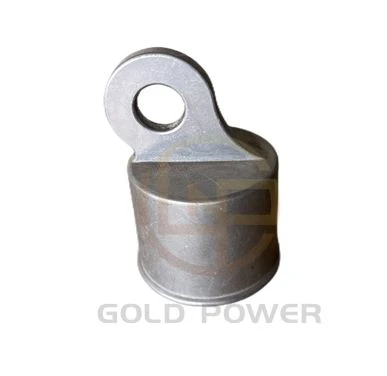
As a rail end supplier, we offer a range of products that can contribute to vibration reduction. Our Rail End products are manufactured with high - precision machining techniques to ensure smooth and accurate surfaces. This helps to minimize the discontinuity at the rail joints, reducing the impact force and vibration when the wheels pass over them.
We also provide Chain Link Fence Loop Cap and Loop Cap products that can be used in conjunction with our rail ends. These caps can provide additional protection and stability to the rail ends, further reducing vibration.
Our products are made from high - quality materials that have excellent mechanical properties. They are designed to withstand the high - stress environment of rail systems and to provide long - term vibration - reduction performance.
The Working Principle of Our Vibration - Reduction Products
Our elastic rail pads are designed with a specific combination of hardness and elasticity. When the train wheels apply a load on the rail, the pad deforms slightly. This deformation absorbs the energy generated by the impact and vibration. The pad then slowly returns to its original shape, releasing the stored energy in a controlled manner.
Our rail end products are manufactured with strict quality control measures. The smooth surface finish of our rail ends ensures that the wheels roll over the joints without significant impact. The precise dimensions of our rail ends also help to ensure proper alignment, reducing vibration caused by misalignment.

Case Studies
In a recent project, a railway line was experiencing excessive vibration at the rail ends, which led to increased noise pollution and rapid wear of the rails. Our company was contracted to provide vibration - reduction solutions. We installed our elastic rail pads and used our high - precision rail end products.
After the installation, the vibration levels were significantly reduced. The noise pollution was also reduced, and the wear rate of the rails decreased. The railway operator reported a more comfortable ride for passengers and lower maintenance costs.
The Future of Vibration - Reduction Measures for Rail Ends
The demand for more efficient vibration - reduction measures is increasing as the speed and load of trains continue to increase. In the future, we can expect to see the development of more advanced materials and technologies for vibration reduction.
For example, smart materials that can adapt to different load conditions and vibration frequencies may be used in rail systems. These materials can automatically adjust their properties to provide optimal vibration - reduction performance. Additionally, more sophisticated monitoring systems may be developed to detect and predict vibration problems in real - time, allowing for timely maintenance and intervention.
Conclusion
Vibration at rail ends is a complex problem that requires effective solutions. By understanding the causes of vibration and implementing appropriate vibration - reduction measures, we can improve the performance and safety of rail systems.
As a rail end supplier, we are committed to providing high - quality products and solutions for vibration reduction. Our Rail End, Chain Link Fence Loop Cap, and Loop Cap products are designed to meet the highest standards of quality and performance.
If you are interested in our products or need more information about vibration - reduction measures for rail ends, please feel free to contact us. We are looking forward to discussing your requirements and providing you with the best solutions.
References
- Grassie, S. L., & Kalousek, A. (1990). Railway Noise and Vibration: Mechanisms, Modelling and Means of Control. Elsevier.
- Frýba, L. (1996). Vibration of Solids and Structures under Moving Loads. Thomas Telford.
- Sheng, X., Jones, C. J. C., & Thompson, D. J. (2004). A three - dimensional finite/infinite element approach for the prediction of railway ground vibration. Journal of Sound and Vibration, 278(3 - 5), 461 - 486.


